
Review - The Wisdom of Imperfections
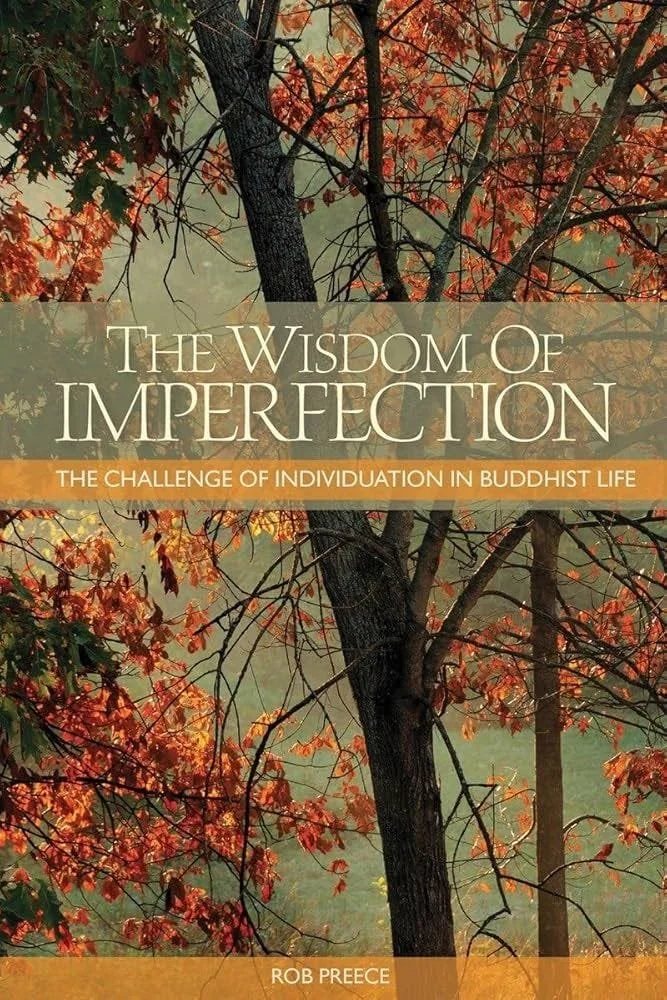
This book reshaped my perspective during a recent trip—so before exploring its ideas, let me share a story from that journey.
Here’s what happened: my friends and I were trekking in the Cordillera Huayhuash, and we knew three other people would be joining us, but we had no idea who they were. We joked around, imagining maybe three tall, smart, charming guys—who knows, our future husbands, 😉 but reality had a different twist: three women, almost my grandma’s age. I wasn’t exactly in top shape either, but still, the difference in pace was going to be huge, and honestly, I felt pretty upset and disappointed at first … then, with a friend’s help, I tried rethinking the whole situation, searching for a silver lining.
I didn’t have anything against these women, I didn’t even know them, but in just a few minutes, I managed to transform the open, spacious feeling I’d been carrying into a tight, self-created hell.
Turns out these women were from Wales 🏴 —the part of the UK I love. It was a great chance to learn about their culture and brush up on my “British” English, and honestly, they became role models. At 68, they were fit, courageous, and had the time and money for trips like this. It’s the kind of life I’d love for my parents—and myself, one day.
Altitude sickness, I’ve realized, is completely unpredictable. Age, fitness, experience—none of it matters. It’ll strike when you least expect it. I came here a bit overconfident from my trip to Nepal, and on the first three days, I had headaches I couldn’t handle without pills. This is one thing I respect about the mountains—they remind you how small and insignificant you are, grounding you right back.
I’ve to admit, that I have a love-hate relationship with social media—and honestly, I’m not always comfortable sharing personal stuff, but I share these stories to normalize the “shadow” side of these Instagrammable trips.

Rob Preece explores the intersection of Buddhist practice and Jungian psychology, focusing on the journey of individuation. Preece examines how embracing imperfections and facing inner challenges can lead to spiritual growth and self-realization. He draws on his experiences as a psychotherapist and Buddhist practitioner to illustrate how integrating Eastern and Western approaches can help overcome psychological obstacles, foster compassion, and deepen self-awareness.
Individuation
Carl Jung: ‘‘Individuation is an expression of that biological process—simple or complicated, as the case may be—by which every living thing becomes what it is destined to become from the beginning.”
Individuation implies becoming ever more conscious of, and fully receptive to all aspects of ourselves, both positive and negative, to become increasingly whole. This is a path that values our individual qualities and potential, along with all of our human frailty and fallibility.
Let’s begin by highlighting the key differences between:
Buddhism
The spiritual path is more structured and doctrine-centered.
Childhood. Buddhism lacks a developmental model for understanding how personality and ego-identity form in childhood. This makes it difficult to explain self-identity development, and how it can be damaged. The influence of this damage on the adult is hard to clarify and often more complex than any model found in the traditional teachings.
The Silence Barrier. In the Tibetan tradition there are instructions on how to evoke a particular tantric deity, or gain an experience of emptiness (shunyata), but seldom is there an explanation of how the individual experiences the effects of practice. This insight may be found only if one spends time with experienced meditators who are willing to speak about their own experience. Unfortunately, most Tibetans are reluctant to speak of their inner process, because they don’t use psychological language, but also because they seldom allow such intimate questioning.
Western Psychology
The psychological process is more organic and person-centered.
1.The Urge of Individuality.
Individuality is a way of living, and it is also a way of trying to be visible and different in a culture that seems to delight those who are different, special, or famous. There is a strong cultural demand that we each try to express ourselves in a uniquely individual way. We must be able to cope with the demands of a relatively hostile, competitive, and insecure world.
Individuality has positive and negative consequences:
+ It will bring us a capacity for self-sufficiency, self-reliance, self-expression, self-motivation, and a relatively stable sense of self-identity, all of which might be seen as ego-oriented. It leads to innovation and change and the reevaluation of old conventions.
- It will engender insecurity, self-preoccupation, competitiveness, and all the narcissistic failings we suffer. It can lead to an overemphasis on the need to prove oneself and an arrogant self-determination.
One of the by-products of our individualism is that we can think our own thoughts and, as a consequence, will tend to question spiritual authority.
From an Eastern perspective, this might appear terribly arrogant. Some would argue it reflects a very positive aspect of our Western tendency. We are less likely to be taken for a ride by the unscrupulous. We are more likely to question traditionally held beliefs to genuinely explore their validity. A natural consequence of the need for individuality is the desire to only embark upon what feels right for us. Some may say this is just a pick-and-mix kind of mentality that takes only what is easy and safe.
2.“Supermarket mentality”. Wanting quick and easy solutions to our problems. The Western disposition to try a little of this and a little of that could create what he called “spiritual soup”, all mixed up together.
The contradictions between Buddhist ideals and Western lifestyles: it’s increasingly noticeable that the Western psyche, with its particular cultural inheritance and emotional wounding, does not always fit comfortably within an Eastern approach to spiritual practice. This is not to conclude that an Eastern tradition does not suit us, or that Western people are spiritually inept.
Life is a rich but fragile mystery!
The Bhavachakra (Wheel of Life): In Tibetan depictions of it, from the moment of conception we are held in the jaws of Yama, the Lord of Death.
Perhaps the greatest miracle is that some of us survive and are able to engage in life. From the moment we step into the world, we face expectations and pressures to be able to express our personal character and capacities.
In the womb, the fetus’s chances of surviving pregnancy are not great.
An infant's instinctual cries after birth are a powerful survival reflex.
As teens, the struggle intensifies throughout our education, as we’re compared to others.
By adulthood, we’ve developed sophisticated psychological patterns to deal with the uncertainties in the fiercely competitive environment of work and relationships.
These strategies shape the person we become and, unfortunately, can do so in increasingly limiting and rigid ways.

As our personality and ego-identity become stronger, they can also become less flexible, so that our capacity for adaptation and change slows and freezes. What were once natural mechanisms for adaptation, growth, and survival can begin to be limitations that accentuate our suffering.
Life then presents us with a further challenge: ‘‘Are we ready and willing to wake up, to let go and open to our intrinsically fleeting, illusory nature and allow ourselves to change?’’
Some may take up this challenge, while others choose to do otherwise.
Suffering
Buddhism perspective:
Our suffering originates in the mind from a basic disposition of clinging and grasping.
Suffering ( dukkha in Sanskrit), relates particularly to a recognition of the fundamental unsatisfactoriness or pointlessness of what we experience.
We may put effort and time into things that at first seem to offer a sense of meaning, only to find, at some point, that they begin to feel hollow and unsatisfactory. We may suddenly stop and ask ourselves why we are bothering. Money, status, self-esteem, reputation, security, material success, self-image, self-validation, approval, duty—the list of possible reasons is endless. Life may be insisting that we begin to face ourselves and honestly admit to our self-imposed restrictions and limitations.
Far from using this human potential meaningfully, we use it to indulge our insecurities and exploit the natural environment around us. Blindly, we create more suffering and harm in the world rather than truly recognizing our potential.
Things are as they are and we suffer because we become too sticky and attached. Renunciation in this sense is letting go of any expectations or hopes that reality should give us a sense of happiness; equally, it is letting go of the cynical aversion that loathes the world for all its flaws. The meaning of this renunciation is not giving up life; it’s living it fully, fearlessly, and with openness.
Western psychology perspective:
Our suffering originates with emotional wounding, particularly in childhood.
The combination of stresses in the environment and our innate disposition together make us grow and can also leave us wounded psychologically.
Where Buddhism and Western psychology meet is in the idea that the wounding we experience arises through an interaction between inner propensities and outer conditions.
How often do we react to not getting what we want? And…
find someone to blame
distract ourselves
rationalize our feelings away
find some substitute indulgence
Midlife Crises

The inner call to change often arises in those who have worked hard. They may have focused their attention narrowly—perhaps on sustaining a relationship, bringing up children, or developing a career. Conversely, some suddenly wake up to the fact that they have drifted through their lives and gone nowhere.
When this occurs, particularly in mid-life, leads to a crisis of meaning and purpose, prompting a shift in focus as the individual seeks the missing element in their life.
Some will abandon their jobs and head off on an adventure or quest.
Others may seek the spiritual nourishment they need through participating in meditation retreats, joining local classes and groups, or going into therapy.
Some search for what is missing by diving into a romantic affair.
The power of an inner call/impulse is often hard to resist, and its repercussions can be dramatic.
“Many of us are like plants that have grown in rough, stony, poor soils and become damaged, contorted, and unhealthy, yet still manage to flower. Like these plants, by the time we reach relative adulthood, we may have been damaged in ways that we ourselves can barely see. The journey begins as we start to acknowledge our wounding and slowly take steps to heal ourselves.”
Many people describe a painful sense that they cannot find what they want to do in life. It’s usually accompanied by feelings of pointlessness or chronic frustration. For some, there may be a deep-rooted feeling that there is some task they are here to do but which they do not yet feel they have found.
Later in life, when our personality structure and emotional patterns have become too rigid and unhealthy, they hinder our ability to move forward and stifle our natural creativity and responsiveness. Such a crisis requires deep self-assessment and a need to change some fundamental beliefs about ourselves—the view we have of our lives and relationships, and is often precipitated by external events.
The source of this restless, unsettling feeling may be a mystery, but it appears to be an undeniable aspect of the psyche that cannot be ignored.
The Urge for Spirituality
When we have a poor sense of identity, we tend to relate poorly to the concrete, material world and body.
Spirituality can then become seriously ungrounded:
For some, this may manifest in a kind of idealistic, mystical hysteria where everything is wonderfully positive, magical, and beautiful but has little relationship to the normal world and fails to include the dark, painful side of life.
For others, it can lead to a fanaticism that drives them into strict and intense practice to attain spiritual realizations. Such tendencies to desperately seek spiritual salvation will often cover deep-seated problems that are not resolved.
When this happens, there is greater potential for our spirituality to become simply another expression of our pathology.
Renunciation can become another level of denial and avoidance, compassion can become a sickly sentimentality that has no substance to it. Our desire to help others can come from “compulsive caring”, or a compulsion to sacrifice ourselves because we feel worthless.
In the extreme, this can lead to an attitude that believes it is fundamentally wrong to enjoy ourselves. We may become stiff and controlled in the attempt to abandon all the things we used to enjoy that are “worldly concerns.” We give them all up and throw them away. The more we enjoy them, the more virtue there is in giving them away or stopping them. In this way, we gradually tighten the grip we have on our life and its pleasures. If we enjoy music, then we give it up; if we like relationships, then we avoid them; if we like food, then we become strict about it. In this way, we avoid the stimulation of those feelings of enjoyment that might give rise to attachment, which is the cause of suffering.
Lack of identity, formless vagueness, and absence of boundaries don’t exemplify the Buddhist idea of emptiness!
The Shadow:
Understanding Our Hidden Self

Definition: The Shadow, a term introduced by Carl Jung, refers to the parts of ourselves that we push into the unconscious to protect our conscious lives. These are aspects we find unacceptable, either to ourselves or others, and so we keep them hidden in the dark. The Shadow is a blind spot in our self-awareness, and although it is difficult to recognize in ourselves, others may often see it more clearly.
Formation: As we grow, we learn what is acceptable and what is not, based on the prevailing attitudes around us. We start to repress feelings and behaviors to avoid disapproval and being judged as bad or unacceptable. An infant, much like an animal, has little or no discrimination of what is acceptable. Its responses are raw, natural, and uninhibited. Over time, as the ego forms more fully, we learn to inhibit behaviors that do not serve to maintain approval from others.
For Jung, to be human is to have a Shadow. Recognizing and integrating the Shadow can lead to greater self-awareness and personal growth.
ARCHETYPES
We’ll explore three popular archetypes, while Carl Jung identified many more.

Warrior
Valuable qualities: Values such as courage, discipline, and integrity. Warriors fight for what is right, driven by a sense of purpose and justice. They are protectors, defending not just themselves but others, and they embody strength, resilience, and the will to overcome challenges. Their values often center on honor, loyalty, and commitment to a greater cause.
The shadow side: is the desire for power. This leads to the potential to be possessed by it and then abuse it. A state of inflation arises usually because someone is blind to the danger. Perhaps one could say that the warrior’s greatest fear is to be dominated by an inner weakness, particularly arrogance, laziness, or self-indulgence. The warrior would intend to never allow himself or herself to lose that capacity to remain alert.
It is often hard to admit that life and its problems frighten us and that we fear that things may go wrong and even panic when they do.
Wanderer
Valuable qualities: Driven by curiosity, they seek new experiences and personal growth, valuing independence and the pursuit of truth. The Wanderer embraces change and the unknown, prioritizing the journey over the destination. They value authenticity, often choosing their own path over conformity, and they are deeply connected to the inner quest for meaning and self-understanding.
The shadow side of this is the difficulty in stopping. People who frequently travel may realize that their wandering leaves them feeling unfulfilled in some way. Many who avoid attachment to people and situations find that constant movement becomes an unhealthy habit. The compulsive wanderer fears commitment and feels trapped by the idea of settling down, using detachment as a form of avoidance. This leads to difficulty forming deep relationships or establishing roots in any area of life … (read above about Peter Pan Syndrome).
During these times, feelings of depression, melancholy, pointlessness, and futility can arise. The wanderer may feel lost, without direction, and overwhelmed by the fear of commitment. This dark phase involves a loss of vitality, enthusiasm, and meaning, a loss of what was secure and familiar, and our ability to control what is happening.
Knowing when to stop and remain in one place and commit to something meaningful—like planting roots—can be a pivotal shift. Like Odysseus, who was told to plant an oar in the ground, once the lessons of the wanderer are learned, it may be time to move on to a new path.
Servant
Valuable Qualities: Patience, generosity of heart, and the ability to overcome and let go of resentments and judgments. If we are to serve others we must develop an evenmindedness, an equanimity, that does not project our shadowy prejudices and dislikes. The capacity to open and respond to the needs of others without becoming caught in limiting self-grasping requires practice.
The Shadow Side: Self-sacrifice, while often rooted in love and compassion, can become self-abuse when it leads to neglecting one's own well-being. This dynamic often arises from unresolved emotional wounds, particularly in those conditioned to prioritize others' needs over their own. A martyr complex can develop in individuals who were taught to care for others at their expense, especially those who grew up with emotionally needy or narcissistic parents. In relationships, particularly with emotionally immature partners, individuals (often women) may sacrifice their personal growth and independence, adopting a nurturing, motherly role. The servant's journey is often hindered by internal struggles—insecurities, fears, and self-doubt—that undermine their emotional well-being, making it difficult to serve others without personal cost.
There is a difference between a genuine self-sacrifice that comes from a deeply rooted and healthy self-worth and the martyr-like self-negation that arises from unresolved wounds.
Peter Pan Syndrome
This represents a disposition that emerges in young (predominantly) men: a fear of relationships that require commitment and real emotional engagement. They may be involved in a relationship because they can’t resist it, but there is often an underlying belief that relationships are essentially an obstacle, hindrance, or distraction to their path. Women who are partners to such men often describe the pain of being caught up with someone who fears commitment.
Abandoning or avoiding family, relationships, and work in the world as an obstacle to spiritual practice is not the true meaning of renunciation!
Commitment requires courage and the readiness to see that life is too precious to simply mess around frivolously. It’s about more than joining a club or enrolling in some external course of training: it’s a dedication to our true nature or true potential.
Relationships can be a powerful opportunity to truly test our capacity to practice, to let go, to be compassionate, and to honestly face our emotional problems.
The vivid sense of ‘‘I’’
The most obvious time we recognize this vivid sense of “I” is when someone threatens or insults us. Strong emotions such as fear, grief, shame, desire, jealousy, guilt, and so on bring into clear relief our cherished and protected sense of me.
When our “buttons are pushed”, we may:
React defensively with anger or aggression to protect ourselves
Feel hurt or insulted and withdraw into ourselves for comfort and safety
In these reactions, we sense our attachment to a fixed sense of self. Initially, it feels like something central and solid that needs defending. Upon deeper reflection, we realize these reactions cling to something insubstantial, distorting reality. Though we may feel hurt or rejected, we see that this reactive self is not fixed, permanent, or real. It has no solid foundation in our bodies, feelings, or minds.
This ego needs to relate to things, either pleasurable or painful, to reinforce its sense of existence. Underlying the grasping at self is a fundamental anxiety that makes us keep “doing” because the space of “being” is unbearable.
Identified with emotions
When an emotion arises, we may become completely absorbed in it and feeling the overwhelming power of the emotion.
For example, when we’re hurt, we can become so absorbed in the pain that it feels as if we are the hurt itself, making it all-consuming and leaving no room for any other reality. From this state, we may react instinctively—by breaking down, lashing out, or becoming defensive. In this identified state, we lack awareness of the emotional process and can’t observe the experience because we’re lost within it.
The ‘‘control freak’’ and intellectualization
Our emotional need for security in a chaotic world leads us to constantly try to control our environment.
The intellect is one dimension of this ego control that dominates many people. This form of ego control can be expressed as a kind of arrogance that believes that it’s always possible to find an intellectual, scientific, rational answer that will give a sense of security. When the intellect provides a rational answer to what is going on, it creates a sense of being in control and, therefore, safe.
Part of the mindset shift is the recognition that:
Things are not what we would like them to be—they are not reliable, solid, and safe.
The ego doesn’t have much actual control over reality.
Avoidance and Disembodiment
Regrettably, much of our time is caught up in a preoccupation with life struggles and emotional insecurities that distract us from what might be possible.
While we may be tempted to hide our fallibility and problems and deny or anesthetize our emotional struggles, they are resolved only when we genuinely address them honestly and openly. Anything else simply perpetuates a regressive sleep of ignorance. We may put a bandage over our pain and wounds, hoping they will go away, but at some point, we will need to bring fresh air to them.
In our lives, it would seem that almost anything may be used as a means to avoid facing ourselves and anesthetizing our awareness. We may take refuge in our material desires, our sensory stimulation and entertainment, our work, relationships, and various intoxicating substances, including food.
If this is true, why does it feel so frightening?
Perhaps because, deep down, we sense there’s no escaping the reality of our lives. We’re masters of avoidance, constantly seeking refuge in meaningless things that provide an illusion of safety, ease, and happiness. We may work incredibly hard to create this security, only to ultimately recognize it as an illusion.
Disembodiment characteristics:
Apparition: This stage begins when an infant in distress can no longer cope with the emotional pain, dissociates, or splits off from the present moment.
In Adulthood: People with this tendency may drift into a glassy-eyed state, gazing into space or out of a window, as though they've momentarily ‘disappeared.’ This can be unsettling for others, creating a sense that the person isn’t fully present, leading to a feeling of disconnection in interactions.
Pathology: This pattern is frequently associated with the schizoid personality type, as understood in psychoanalytic theory.
Anger
The passive victim who feels unable to make choices and just accepts his/her lot with hopelessness manifests an inability to claim personal power.
Anger may be the beginning of a shift towards no longer being a victim. Anger can be the first stage in the process of regaining and restoring self-confidence, self-worth, and the power to be effective in life!
Types of Manifestation of Anger:
Familiar: rage, outrage, resentment, frustration, and aversion.
Passive: depression, passive aggression, boredom- they are often not recognized as manifestations of anger.
While anger is one manifestation of a poor relationship to personal power, another is the incapacity to create effective boundaries. Those unable to say no are then potentially open to abuse and manipulation through others’ demands.
This inability will result in angry resentment or lead to formlessness or the lack of a clear expression of individual identity.
Asserting limits, saying no, and standing up for our inner truth with firmness and courage do not imply that we have become egocentric and selfish! It is more likely a healthy self-protection is needed in certain circumstances for us to retain our self-identity.
Depression
We often view depression as a curse, something that disrupts our lives if we let it take hold. In our struggle against it, we may try to anesthetize ourselves by taking refuge in drugs, food, the television, or even work.
Depression can take various forms and be of varying depths. It often arises after a significant life blow that needs to be processed and integrated, like:
The loss of a loved one, which requires time to grieve and heal.
A crisis around work or financial matters that needs to be digested to discover how to move forward.
A major disaster, accident or illness that is asking us to look at our life and see what needs to change both inwardly and outwardly.
‘‘Pain motivates us when an inner vision does not.’’
How it feels: Once depression sets in, we may experience profound sadness and grief, mourning the loss of stability, security, and dreams of a life we thought was steady. This descent can feel isolating, filled with loneliness and despair, as we navigate it without allies. Our world may seem drab, lifeless, and pointless. Our energy fades, and we lose interest in things we once cared about, feeling a sense of helplessness and a painful pessimism.
During this time, we need people who are willing to be present with us—who will listen to our fears and distress without trying to fix or change them. Depression is often visualized as a black pit of despair and loneliness, and as we sink into it, our sense of hopelessness may trigger in others a need to counter our darkness with positivity. However, when we are in the depths of despair, being told to “look on the bright side” is the last thing we need. Instead, true support comes from those who can sit with us in our pain without needing to change it.
Thoughts Between the Lines
Our essential nature is clear, spacious, and luminous, free of the dualities of good and bad, light and dark. Try to see things as fluid, not simply black and white.
Often, after long periods of emotional stress or turmoil, we will need to stop and rest. If we don’t, our body may tell us to do so by getting sick. Listen your body.
We need a compassionate presence that accepts us as we are, without fear, judgment, or the urge to change us. Likewise, we should strive to be this presence for others.
Life may be suffering, on one level, but there is also great richness, joy, and value.
